
Tantrums, Transformed
From Overwhelm to a Calm Brain and Body Response for 1-5 year olds.
Led by Laura Burnham, M.A., CCC-SLP — licensed pediatric SLP
You’ve already tried all of the parenting tips. All of the instagram advice, everything you’ve found on Chat GPT. You’ve done it.
You’ve tried staying calm, ignoring the tantrum, staying firm on boundaries and directions, using timers, and labeling feelings.
Sometimes it helps a little. But most of the time it doesn’t. And there is still a constant presence of tantrums everyday, in the home and outside of the home that feels overstimulating and exhausting.
You might be asking,
“Why isn’t this working when I’m doing everything I’m supposed to?”
You’re also probably asking,

Why does “no,” feel so hard for my child?

Why does my child need constant stimulation?

Why does independent play feel so challenging?

Should I be worried about communication, attention, or emotional regulation?

I want to help my child cope with big feelings but I don’t know how.

 You are doing absolutely everything you can.
 And still, you often end the day feeling: helpless, emotionally exhausted, and judged.
In sessions, parents will often say:
“She doesn’t know how to cope with her big emotions.”
“He needs constant stimulation.”
“I feel helpless. I can’t figure out what she wants and it takes an emotional toll.”
“The judgment from family about how we handle behavior is a lot.”

And here’s what I tell them:
None of this points to you being a bad parent.
You’re doing enough and this isn’t your fault. Here’s the truth:
This is what actually shapes your child’s behavior….
4 Pockets:
Emotional Agility
Stimulation Level
Child’s Personal Needs
Coping Skills
When one or more of these systems are unstable, you see it on the surface as:
More intense, longer tantrums
Needing constant stimulation
Very little independent play
“Clingy and wild” at the same time
Hard transitions or moving from one activity to the next
Difficulty with “no,” “wait,” or “don’t”
More intense behaviors like hand banging, biting, kicking or hitting
The Tantrum Transformation Program is about strengthening the systems underneath and build lifelong skills so your child can actually cope, communicate, and manage, for now and for their future.
My Promise: By the end of the program, you will understand what’s driving your child’s tantrums and communication breakdowns and you’ll know exactly what to do in the moment to deescalate meltdowns using a brain-body approach, without punishment, guessing, or escalating power struggles so that you will feel confident with tantrums and behaviors both inside and outside the home.


Meet Your Guide
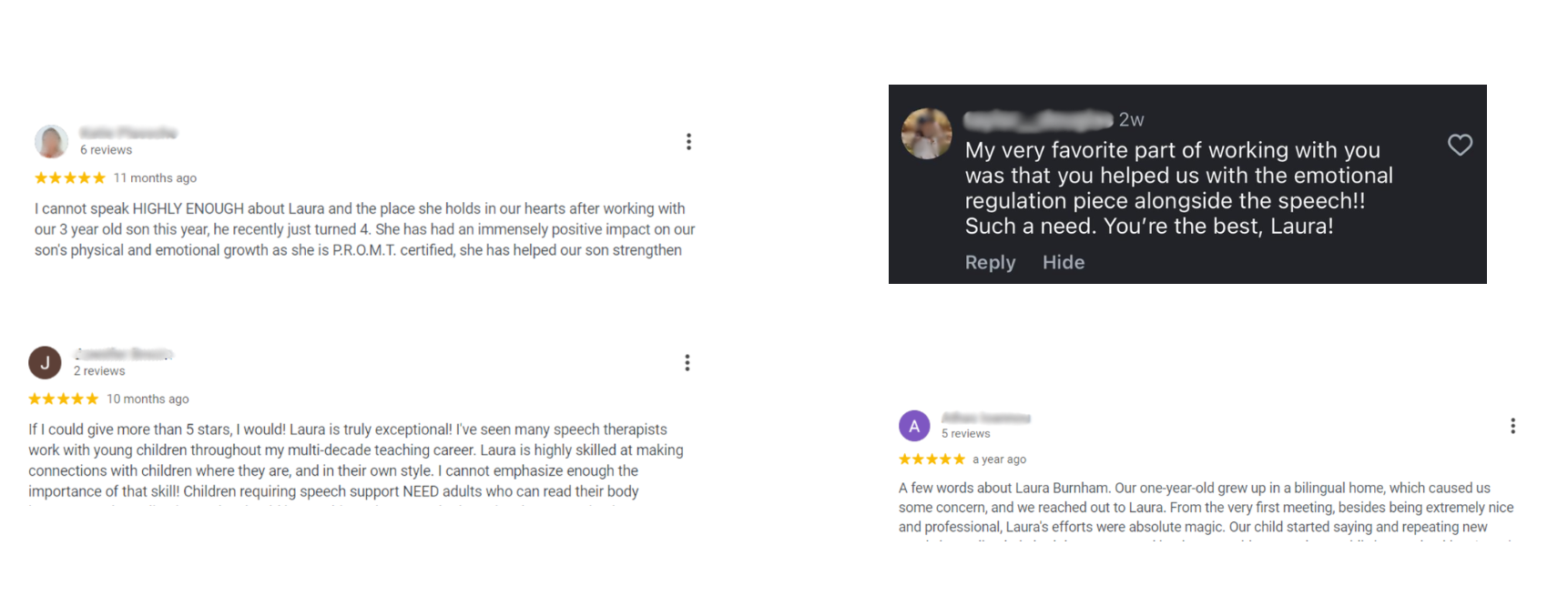
I’m Laura Burnham, M.A., CCC-SLP, TSSLD, a licensed and certified pediatric speech-language pathologist with a private practice in NYC.
I have sat on living room floors with hundreds of little ones and their parents for nearly a decade.
I’ve watched the same pattern repeat across hundreds of families.
After nearly a decade of working with 1-5 year olds in NYC, here are the patterns I’ve seen…
Thoughtful, educated parents doing everything “right” and still feeling overwhelmed, overstimulated and exhausted with tantrums.
Not because they weren’t doing enough.
But because no one had shown them how to work with the brain, body, and nervous system that’s actually developing for the1–5 and how to use techniques that match that development.
I started to realize that tantrums went so much deeper than just behavior. After sessions with hundreds of families, I discovered this: when the systems underneath the behavior (sensory system, emotional system, communication needs, ability to shift / transition) were wobbly, tantrums got worse and worse.
Most tantrum methods and parenting advice never even mention or touch upon these underlying systems and therefore do not address the root of the problem.
And here are the results I’ve seen:
I started seeing the same transformation over and over again, no matter the child’s temperament:
Children who couldn’t handle “no” “wait” or “don’t” built the necessary coping skill to listen, and follow through with directions.
Little ones who “got upset easily” and had “hard moments every day” began to replace those behaviors with regulation, calm, and ease.
Parents who were overstimulated and overwhelmed began describing their home as calmer, lighter, predictable.
Children who needed constant stimulation finally settled into independent play.
Transitions from activity or place to another became easy, doable, enjoyable.
Parents who felt helpless who had previously said, “I’ve tried everything and nothing works” reported feeling confident, clear, and in control.
These transformations weren’t accidents, they were predictable, repeatable patterns that happened when we stopped focusing on the surface level behavior and started strengthening the underlying systems underneath driving the cycle.
And that’s exactly what I teach in my Tantrum Transformation Program it builds the strongest possible foundation underneath your child’s behavior so coping becomes automatic and your home finally feels calm and consistent again.
I also understand that……
You are a parent who is already using all of the parenting tips and advice, are well-educated, paying for good care, and are still questioning:
“Is this just who my child is?”
“What if this keeps going like this for the next year?”
“What if this becomes a bigger problem as he gets older?
Inside this program, we transform tantrums because we get to the root of the problem for long-term change.
And without being talked down to or guilted.
You’re getting a guide with a deep understanding of child brain, body and nervous system development, who will explain what’s happening in plain language, and give you specific, doable techniques that will fit into a busy schedule.
This Program is perfect for you if …..

You’re a parent of a 1-5 year old and tantrums feel overwhelming
Tantrums are lasting longer than expected, 6 minutes or more
Tantrums occur more frequently than expected, 3-5 times per day or more
You want independent play to be easier
You want transitions from one activity or place to another to feel doable without meltdowns
You want your child to cope with big emotions
You want your child to process and regulate their emotions
You want a calmer home with more independence from your little one
You’re looking for a program to feel calm, confident, supported, and understood, not judged
Inside The Program:
Pillar 1: Decoding Nervous System Patterns
In this pillar, you’ll learn how to decode and understand your child’s nervous system before a meltdown starts. You’ll know when and how to step in way before a tantrum unfolds. The nervous system is like the communication system inside the child’s body and includes the brain, spinal cord, and the nerves running throughout their body. When we understand how to read and respond to nervous system cues, everything changes because we build a foundation of calm that replaces the tantrum response.
Pillar 2: Teaching Emotional Agility
When you teach your child emotional agility, they will move through big feelings quickly and easily so they don’t get “stuck” in the tantrum or meltdown. This is a skill that will blossom and grow so that it will show up during harder moments and so your child will not have to revert back to tantrums. Without developing emotional agility, your child gets stuck in big emotions and small frustrations turn into big meltdowns with tantrums escalating instead of resolving.
Pillar 3: Building the Container
Building the Container starts with creating a sense of containment to calm your child’s nervous system and body. Behavior will then naturally organize itself around these limits and boundaries. We build this container first inside the home then gradually extend it to the outside world so it lands, holds, and sticks and your child has the internal motivation to follow your limits and rules. Boundaries feel start to feel like a safe, secure container for your child.
Pillar 4: Strengthen the Calm Response
The fourth and final pillar strengthens the calm response to replace the tantrum response. Your child’s brain, body, and nervous system begins to build new patterns that allows them to shift out of tantrums easily and quickly. These new patterns begin to replace old meltdown patterns and the tantrum cycle is replaced with calm, regulation and ease. The calm response spills over into everyday life and you start to see it in your daily routines, outings, and interactions. The entire home shifts from tantrums and overwhelm to consistency, ease, and calm.
What you’ll get:
Direct Coaching & Support
Direct, ongoing parent-coaching and deep discussions to help you understand and use tantrum techniques based on your child’s age and developmental level. This is where the transformation begins and you are guided each step of the way with individual feedback and support.
4 Pre-Recorded Core Modules
In-depth modules covering the 4 Pillars of the Program (Nervous System Decoding, Teaching Emotional Agility, Building the Container, Strengthen the Calm Response). Each module goes in-depth into each pillar so you’ll confidently implement them in your everyday routines with your little ones. Your child’s internal framework then starts to shift from meltdown response to calm response.
Cooperative Play Framework (Parent-Led)
You’ll learn a fun, parent-led cooperative play routine designed to support techniques from the 4 pillars of the program. This play framework includes age-based examples for ages 1–5 and variations based on your child’s interests (movement, pretend play, sensory play, building, music, etc.).
Age-Based Activities
Clear, straight forward guidance to help you spot developmental patterns and how they are linked to play activities. You will receive age-based activity ideas for your little ones to use in your everyday to strengthen age-appropriate skills.
Independent Play Support for Parents
You will learn how to embed independent play into your everyday. These activities are designed to engage your child in independent play while giving you intentional breaks and calm.
Integration Plan
A clear, parent-focused plan so you will consistently use the techniques and framework during daily routines. This supports long-term transformation and gives your child the strongest foundation for calm and regulation for years to come.